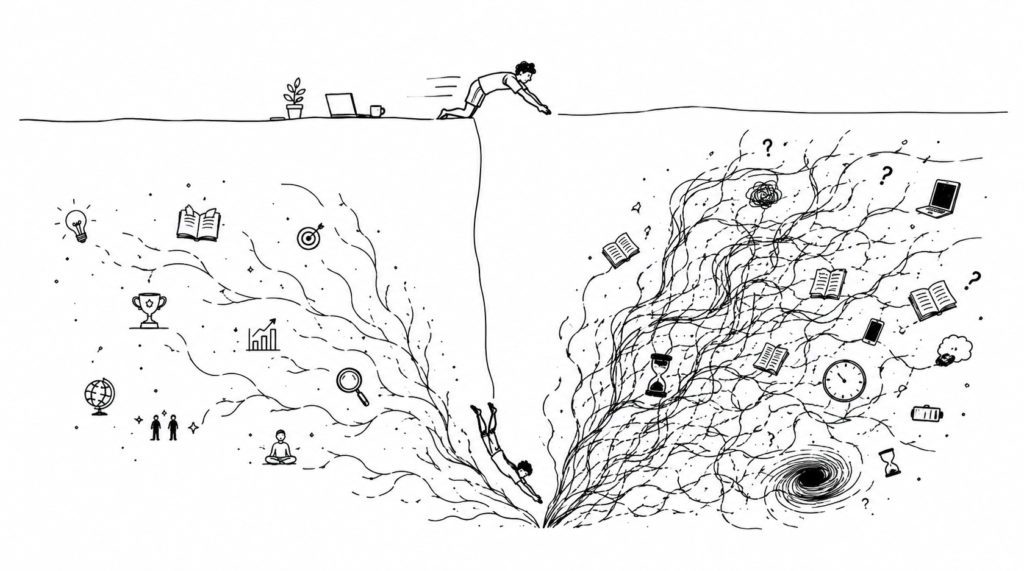
Politics is not something that influenced me during childhood. Like many kids growing up in India, I was more fascinated by cartoons, imagination, gadgets, superheroes, and fictional worlds than governments or politicians. Shows like Tom and Jerry, Dexter’s Laboratory, Doraemon, Power Rangers, and Powerpuff Girls shaped my imagination more than political discussions ever did.
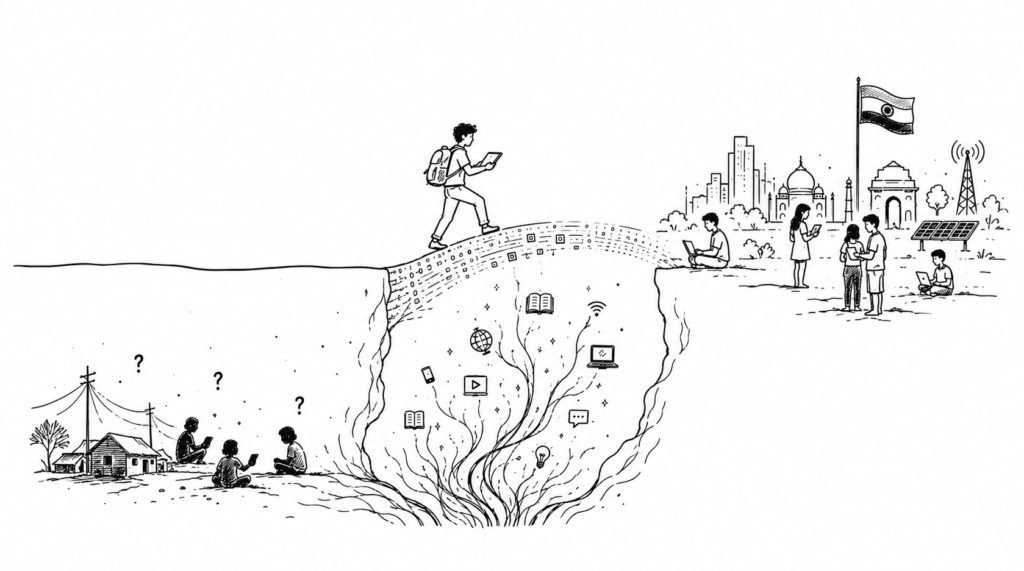
As I grew older and entered B.Tech life, my perspective slowly changed. Traveling in buses, seeing poor road infrastructure, understanding how education systems work, observing corruption, and experiencing how society functions made me question who is actually responsible for the conditions people live in.
Political awareness begins when a person realizes that roads, safety, education, public infrastructure, and governance are not random outcomes. They are the result of decisions taken by governments, politicians, administrators, and systems that people elect and operate.
Childhood Was About Imagination, Not Politics
During childhood, politics never felt important to me because survival responsibilities were invisible. Food arrived on the table, electricity worked somehow, roads existed somehow, and life simply moved forward without questioning who was managing these systems.
My focus was completely different:
- cartoons
- gadgets
- fictional worlds
- creativity
- imagination
- curiosity
Doraemon made technology feel magical. Dexter’s Laboratory made science feel exciting. Power Rangers represented teamwork and strength. These things shaped how I saw the world.
Politics was distant.
Exposure to Real Life Changes Perspective
Things changed once I started stepping outside more and observing reality directly.
Traveling through cities daily made me notice:
- damaged roads
- poor infrastructure
- traffic problems
- weak public systems
- lack of accountability
- corruption in government offices
Then a question naturally came into my mind:
Who is responsible for all this?
Initially, many people simply pray and hope society improves on its own. But later I understood that governments are responsible for planning and administration, politicians are elected to represent people, IAS officers handle administration, and IPS systems are responsible for policing, safety, and law enforcement.
That realization changes everything.
Politics stops becoming television entertainment and starts becoming personal reality.
Why People Rarely Question Politicians
One thing I noticed is that many people are conditioned not to question authority.
From childhood, society teaches people:
- adjust
- tolerate
- don’t argue
- don’t challenge authority
- somehow manage life
Over time, people normalize dysfunction.
Corruption becomes normal.
Delays become normal.
Poor infrastructure becomes normal.
Bare minimum governance becomes something people celebrate.
When systems repeatedly fail, citizens slowly stop expecting accountability.
Another issue is that accountability itself is difficult to trace. If there is a public issue and someone approaches a government office, responsibility often gets pushed from one department to another. Citizens become exhausted trying to solve even basic problems.
This creates helplessness.
Politicians Becoming Public Figures Instead of Public Servants
Today, politicians often function more like public personalities than administrators.
Most public discussions around politicians are not about:
- policy implementation
- completed projects
- manifesto delivery
- accountability
- measurable development
Instead, discussions revolve around:
- personality
- speeches
- caste
- religion
- charisma
- community loyalty
- emotional attachment
People support leaders because they feel represented emotionally or socially, not necessarily because of measurable governance outcomes.
A leader’s speaking style, confidence, aggression, or community identity often influences people more than actual implementation work.
Why People Become Politically Emotional
In my observation, people become politically emotional because humans naturally want belonging.
People choose sides because:
- they want community support
- they want protection
- they want identity
- they want influence
- they want access to power
Political parties become social groups.
Many times, support is not purely ideological. It is emotional and practical.
People support leaders because:
- they belong to the same caste
- same religion
- same community
- same social group
- same regional identity
Humans naturally form tribes, and politics becomes one of the strongest modern tribes.
Weak Systems Create Dependency on Influence
One important thing I observed is that when systems are weak, people stop trusting rules equally for everyone.
For example, during floods or disasters, governments may announce relief funds and support schemes for affected citizens. But on ground level, people often feel that support reaches faster to those who have:
- political connections
- community influence
- local support networks
- strong social backing
People begin believing that without influence, their work may never happen.
This creates a dangerous social mindset where people feel:
“I need a powerful group behind me to survive.”
Instead of trusting systems equally, people start depending on relationships, identity groups, and political connections.
The Problem With Emotional Politics
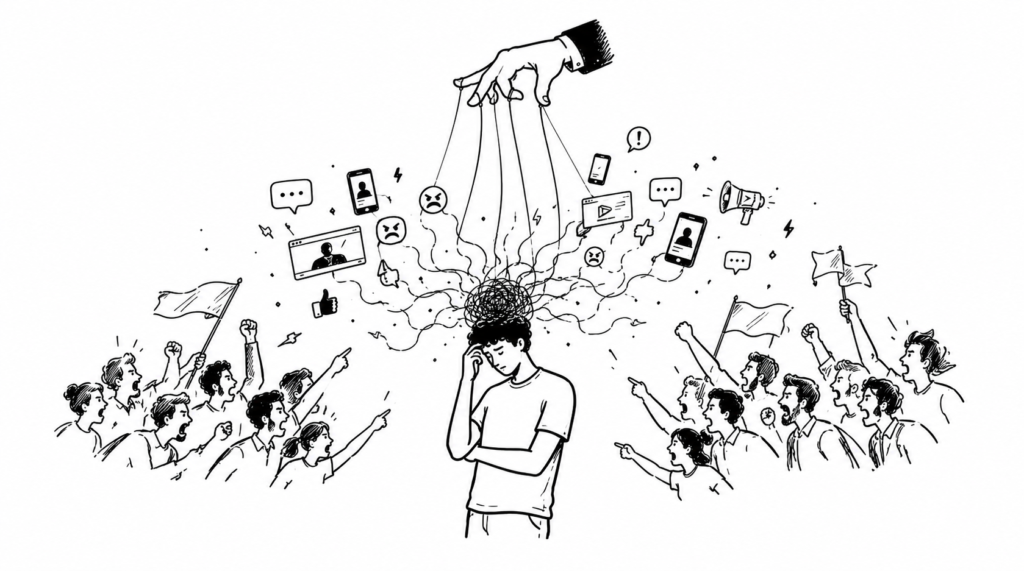
Political emotions are powerful because they give people identity and belonging. But emotional attachment can also stop people from questioning leaders objectively.
People defend political leaders the same way fans defend sports teams.
Discussions become emotional battles instead of governance discussions.
Very rarely do people ask:
- What promises were fulfilled?
- What changed on ground reality?
- Where was public money spent?
- What improved in education?
- What improved in infrastructure?
- What improved in healthcare?
- Why is accountability missing?
Instead, most debates revolve around personalities and emotional loyalty.
My Perspective on Politics
I never became emotionally attached to politics because no political leader fully influenced me emotionally. Some leaders influenced me through communication skills, confidence, articulation, or presentation style, but not to the extent where I blindly followed them.
My interest is not in political worship.
My interest is in understanding:
- systems
- accountability
- governance
- fairness
- implementation
- public responsibility
Politics affects daily life directly. Roads, safety, infrastructure, education, corruption, and administration are not separate from ordinary people. They shape the quality of life of every citizen.
That is why questioning systems is important.
Not emotionally.
Not blindly.
But responsibly.
Conclusion
Politics becomes emotional when people stop seeing themselves as citizens and start seeing themselves only as members of groups.
When systems fail repeatedly, people depend more on identity, influence, and political connections than on fairness and equal governance.
My understanding of politics did not begin through ideology or political influence. It began through observing daily life, public systems, corruption, infrastructure, and accountability failures around me.
The real question is not which political side people belong to.
The real question is whether systems are functioning fairly for everyone.