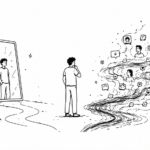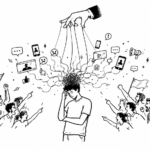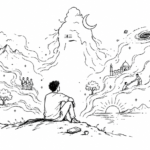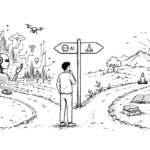
A journey from belief… to rejection… to understanding
1. The Beginning: God as Someone I Could Go To
As a child, my understanding of God was simple. God lived in temples. If I wanted something, I had to go there, stand in front of Him, and ask. At home, we had photo frames—not just images, but a way to feel like God was present with us every day.
God, to me, was a giver.
If I prayed sincerely, He would listen. If I asked strongly enough, He might grant my wish.
Like most children, my wishes were not grand. I wanted to study well. I struggled to understand things quickly, and I often felt slow compared to others. So my prayers were honest:
“Help me understand. Help me become better.”
2. The Wish That Broke My Belief
During my intermediate, I faced a moment that changed everything. I had written an important exam badly, but I still believed I could pass—because I prayed.
I was deeply connected to Hanuman at that time. Not because I knew his full story, but because I saw him as strength personified—discipline, power, and physical excellence. That’s what I wanted to become.
I also looked up to Ganesha in a simple way—someone intelligent, someone who could write something as vast as the Mahabharata.
So I prayed. Not casually—seriously. I asked to pass.
I failed.
That moment didn’t just affect my result—it shattered a belief.
I decided:
God is not going to help me. If something has to happen, I have to do it myself.
3. The Phase of Rejection
After that, I moved into a phase of atheism. Not out of anger, but out of logic.
If effort determines results, then belief without action is useless.
If prayers don’t guarantee outcomes, then dependence doesn’t make sense.
God became, in my mind, something that exists for others—but not for me.
I stopped believing. I started focusing only on myself.
4. Growing Up: Learning to Respect Belief
Over time, something shifted—not in belief, but in perspective.
I realized that faith is deeply personal. What gives someone strength or peace doesn’t need to make sense to me. It just needs to work for them.
I stopped questioning others’ beliefs, especially within my family.
I understood that belief, for many people, is not about logic—it’s about emotional stability.
That was the first sign of maturity:
not agreeing, but respecting.
5. Rediscovering God Through Stories
Even though I rejected God as a “being,” I couldn’t ignore something fascinating—the stories.
Figures like Venkateswara, Vishnu, Lakshmi, Narasimha, and Varaha are not just religious symbols—they are narratives.
Every element in the universe—nature, emotions, power, destruction, balance—has been turned into a character.
That’s what caught my attention.
Everything has a story. And every story carries meaning.
6. “Aham Brahmasmi” — A New Lens
Then came an idea that stayed with me: Aham Brahmasmi — I am Brahman.
This shifted the perspective entirely.
What if God is not separate from us?
What if these stories are not about worship—but about understanding existence itself?
That thought didn’t give me belief.
It gave me curiosity.
7. Stories as Real-Life Blueprints
When I look at epics like the Mahabharata or Ramayana today, I don’t see religion—I see human psychology.
These stories are filled with:
- Strength and weakness
- Loyalty and betrayal
- Ego and sacrifice
Even characters like Ravana are not purely evil—they are complex, intelligent, and flawed.
That’s what makes these stories powerful.
They don’t teach perfection—they teach decision-making in imperfect situations.
8. Culture: God in Action
God is not just in stories—it lives in culture.
Festivals like Bonalu, Diwali, Dussehra, and Sankranti are not random celebrations.
They represent:
- Unity
- Resistance
- Gratitude
- Victory
- Cycles of life
These are philosophies lived through tradition.
9. Temples and the Energy of People
Temples, to me, are no longer “God’s home.”
They are human-designed spaces for reflection.
The chants, rituals, and collective presence of people create something powerful—not necessarily supernatural, but deeply experiential.
When people come with hope, fear, and vulnerability, it creates a shared emotional intensity.
That “energy” we feel is real—whether we call it divine or human.
10. The Harsh Reality: Control and Commercialization
At the same time, I see a darker side.
Religion, at some level, has been used as a tool for control—creating rules, structure, and obedience in societies.
Today, commercialization has added another layer:
- Paid access to temples
- VIP privileges
- Faith influenced by money
And more troubling—
the belief that wrongdoing can be “cleared” through donations.
That turns something meaningful into something transactional.
11. The Shift in My Belief
So where do I stand now?
I don’t believe in God as a being who controls my life.
I don’t depend on God for results.
I believe in:
- My effort
- My discipline
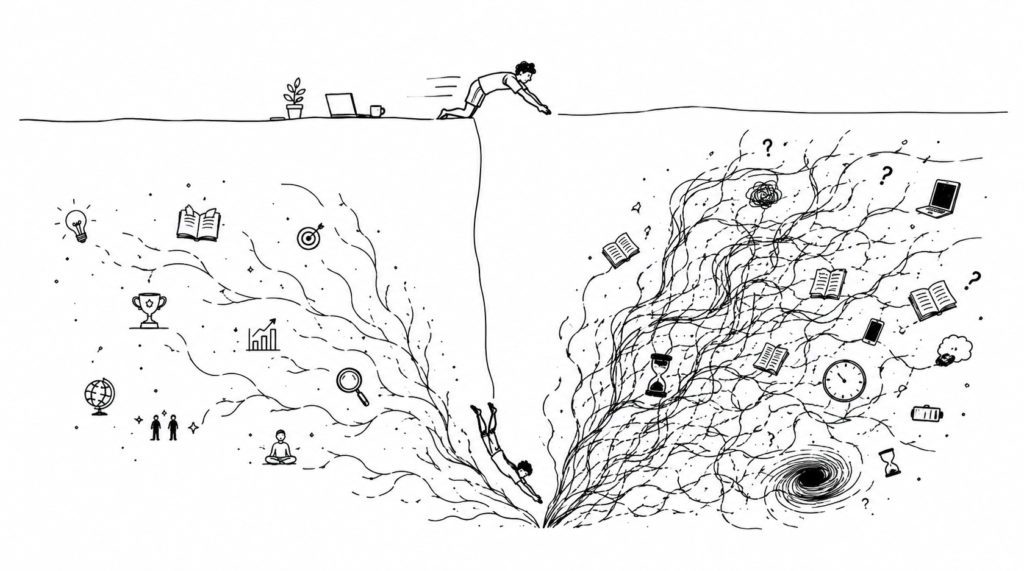
- My ability to overcome distractions
- My responsibility for my life
Before searching for something infinite, I have something very real to build—
myself.
12. Stories Still Matter
Even after all this, one thing remains strong:
The stories are powerful.
Just like people connect with Spider-Man, Batman, or Goku, our own narratives carry equal—if not deeper—value.
The problem is not that people prefer other stories.
The problem is that we are not telling our own stories well enough.
13. So, Who Is God to Me?
God, to me, is not a person.
God is not someone I pray to for results.
God is:
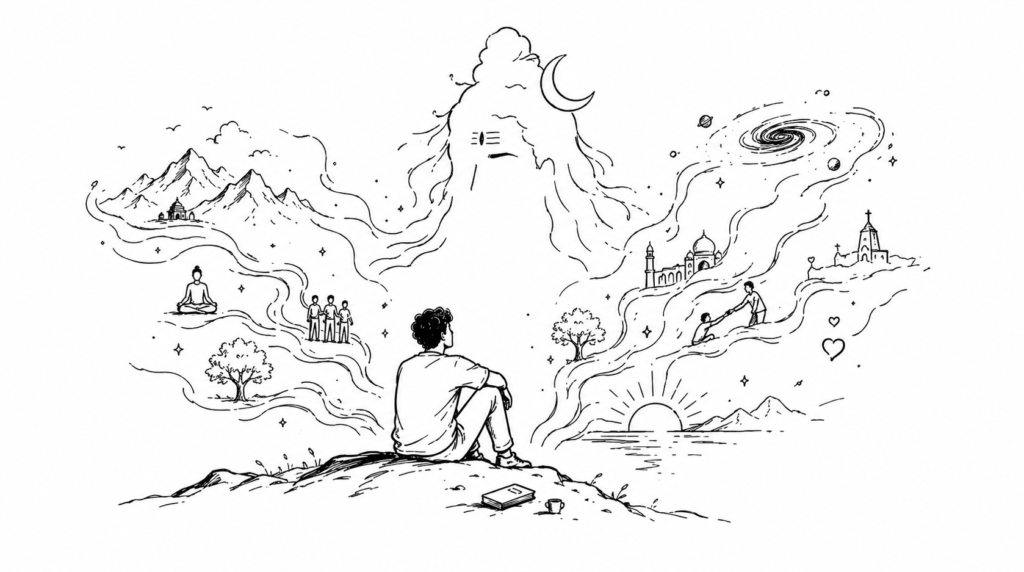
- A collection of powerful stories
- A reflection of human strengths and flaws
- A cultural system that shaped societies
- A concept that can guide—but should not control
And above all—
God is something I am still trying to understand, not something I blindly accept.
14. The Final Thought
If someone asks me today:
“Do you believe in God?”
My honest answer is:
“I believe in becoming stronger first. Maybe then, I’ll understand what God really means.”